Key takeaways
- Emerging legal rulings and novel attribution science are clearing pathways for climate liability lawsuits against traditional energy producers.
- Rising temperatures and extreme weather volatility are forcing utilities and urban planners to prioritize climate resilience alongside raw capacity additions.
- The exponential expansion of AI and digital infrastructure is creating unprecedented demand for clean baseload power, compelling data operators to overhaul water and energy procurement.
- Grassroots leadership and frontline community initiatives are increasingly shaping municipal adaptation frameworks and equitable clean energy investments.
- Policymakers and energy leaders are pivoting toward integrated strategies that blend decentralized renewables, grid modernization, and strict emissions accountability.
The Accelerating Wave of Climate Litigation
The legal framework surrounding global greenhouse gas emissions has reached a notable inflection point in 2026. For years, legal actions brought against major fossil fuel producers encountered procedural bottlenecks, jurisdictional disputes, and evidentiary hurdles regarding causation. However, as Mother Jones recently highlighted, legal mechanisms holding energy corporations accountable for climate impacts have become markedly more viable.
This shift is largely driven by advances in extreme event attribution science. Researchers can now quantify with greater statistical confidence the degree to which anthropogenic warming has heightened the probability and severity of specific heatwaves, floods, and storms. In response, municipal governments, regional authorities, and civic coalitions are leveraging these evidentiary standards in liability and consumer protection claims.
Rather than treating climate change solely as a diplomatic or legislative negotiation, courts are increasingly viewing emissions damages through the lens of tort law, deceptive marketing, and failure to adapt infrastructure. As financial liability risk grows, corporate balance sheets and credit ratings are incorporating long-term exposure to climate litigation as a core material risk.
Extreme Weather and the Urgency for Resilient Infrastructure
The intensification of global weather patterns continues to test public infrastructure. As PBS recently reported, climatologists emphasize that atmospheric warming is fueling more frequent, overlapping, and severe weather disruptions worldwide. The traditional historical baselines that civil engineers and grid planners relied on for decades are no longer sufficient to ensure reliable operations.
According to analysis from Scientific American, a warming world is rapidly establishing new economic winners and losers while creating systemic risks across the global supply chain. In regions prone to protracted heat domes, electricity grids face dual stresses: soaring demand from air conditioning systems coinciding with reduced thermal efficiency in transmission lines and power plants.
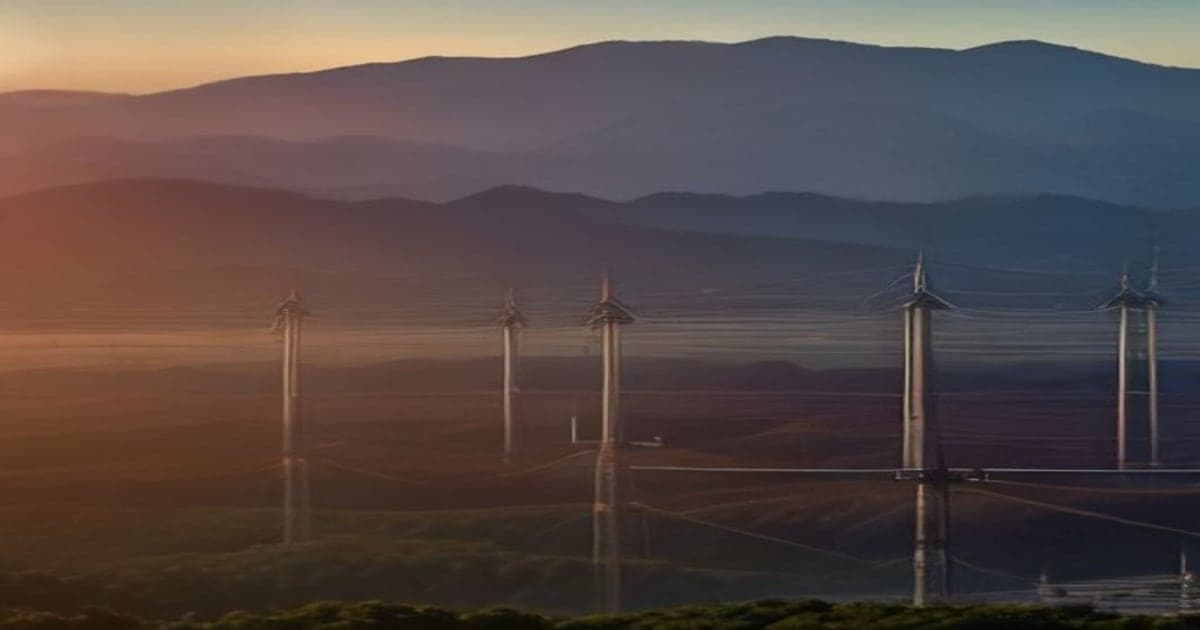
Consequently, the discussion around clean energy has broadened beyond merely installing gigawatts of wind and solar capacity. Grid resilience—encompassing distributed battery storage, hardened transmission corridors, smart microgrids, and demand-response platforms—is now regarded as an essential prerequisite for economic security.
Digital Infrastructure and Clean Power Demand
Simultaneously, the digital economy is accelerating power requirements across major industrial markets. The rapid proliferation of artificial intelligence clusters, cloud computing campuses, and advanced manufacturing has triggered a steep rise in localized electricity consumption. This reality is pushing tech operators to balance massive compute expansion with stringent net-zero commitments.
Corporate disclosures highlight this tension. In its 2026 sustainability report, Prime Data Centers underscored efforts to measure and mitigate cumulative impacts across climate, energy, and water consumption. Data centers require vast amounts of uninterrupted power, leading operators to pioneer advanced corporate power purchase agreements (PPAs) that incentivize 24/7 carbon-free energy rather than simple annual offsets.
Moreover, the water-energy nexus has emerged as a focal point. Evaporative cooling systems in arid regions are giving way to closed-loop liquid cooling, air-assisted architectures, and geothermal cooling systems. These technological refinements illustrate how heavy energy consumers must innovate rapidly to prevent local grid saturation and community resource strain.
While industrial and technological shifts dominate global financial headlines, climate adaptation remains an inherently localized experience. The social dimensions of energy transitions are gaining renewed visibility at community forums and municipal roundtables.
As reported by State of the Planet covering recent Harlem Week events, community-led climate conferences are placing grassroots perspectives at the center of the transition debate. Urban heat islands, historical underinvestment in green spaces, and air quality disparities mean that lower-income neighborhoods frequently absorb the brunt of extreme weather anomalies.
In response, grassroots leaders and municipal stakeholders are advocating for decentralized energy solutions that directly benefit local residents. Community solar gardens, public resilience hubs equipped with islandable battery storage, and localized workforce training for clean-tech careers are shifting the climate agenda from top-down mandates to community-driven development.
Policy Horizons and the Evolution of the Climate Movement
As the physical and legal landscapes evolve, environmental policy is moving into a more pragmatic, implementation-focused era. Speaking on public radio via WDET 101.9 FM, former Washington Governor Jay Inslee discussed the trajectory of the modern climate movement, pointing to the necessity of building enduring political coalitions centered on industrial revitalization and consumer benefits.
The initial phase of the clean energy transition was defined by subsidizing emerging renewable technologies to achieve cost parity with fossil fuels. Having largely reached cost competitiveness in wind, solar, and lithium-ion storage, the current phase focuses on regulatory permitting reform, inter-regional transmission interconnects, and supply-chain sovereignty for critical minerals.
Modern climate strategy is increasingly anchored in industrial policy that links carbon reduction to domestic manufacturing, reliable grid delivery, and consumer pocketbook protections. The focus is no longer simply setting distant net-zero targets for 2050, but delivering visible reliability and emissions reductions before 2030.
Navigating the Path Ahead
The global energy transition in 2026 is marked by greater accountability and practical complexity. Clean energy deployment is no longer viewed in isolation from the legal duties of carbon producers, the power appetites of digital systems, or the resilience of vulnerable communities.
Navigating this phase successfully requires continuous collaboration among corporate leaders, regulatory bodies, technology innovators, and local advocates. As climate accountability deepens through the courts and the grid faces historic demand, building a resilient, low-carbon future remains the defining economic and operational mandate of the decade.